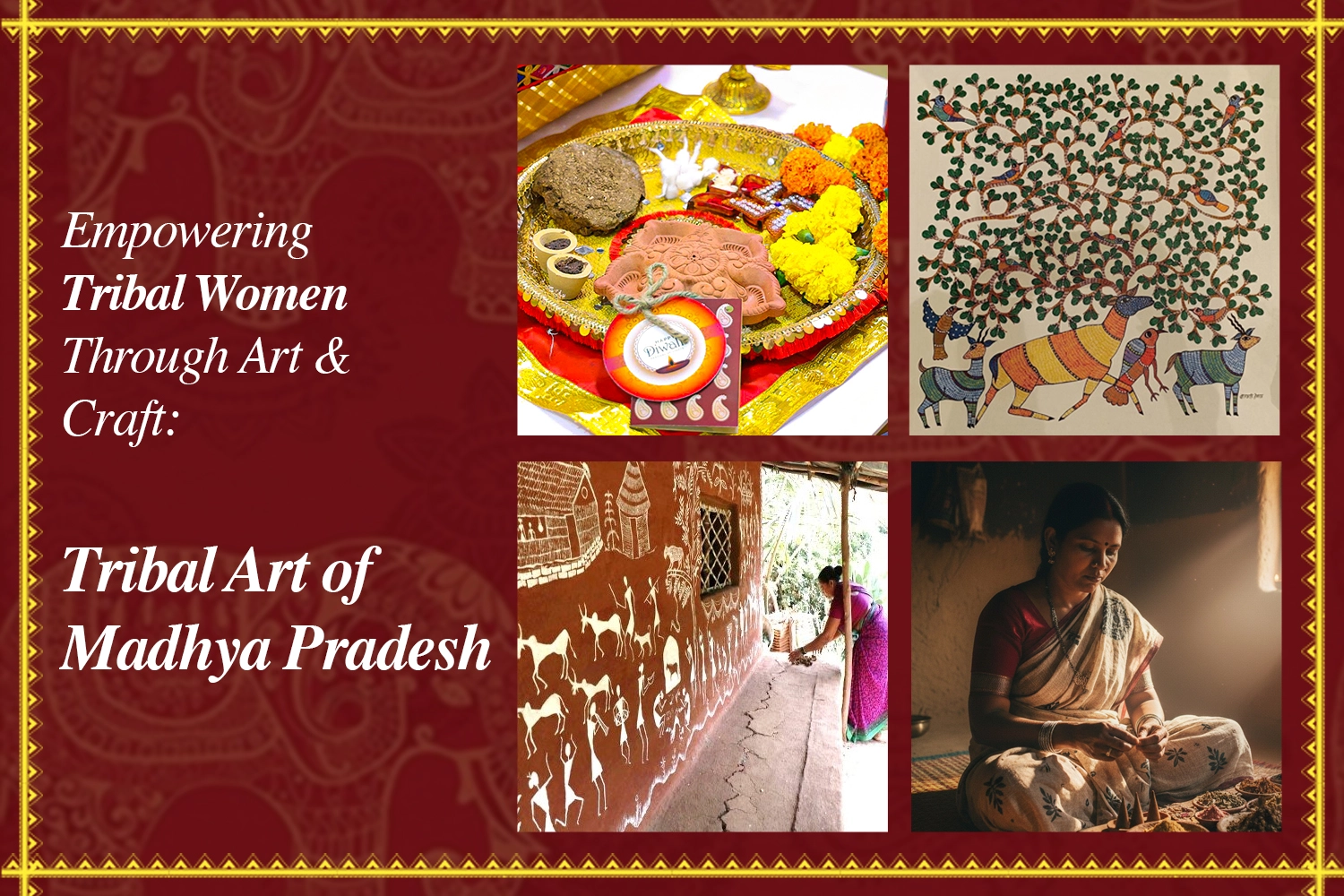
Empowering Tribal Women Through Art & Craft: Tribal Art of Madhya Pradesh
Madhya Pradesh, the center of Incredible India, is a state of wealth with a rich history. It is a state that is gaining popularity among both visitors and art lovers due to its complex art and culture, which has fascinated the world. Madhya Pradesh’s buildings and crafts are amazing, and the state is pleased to have historic monuments, palaces, and temples! The state stands out from the others because of its rich history of culture.
The Gond, Bhil, Baiga, Bhilala, and Korku are just a few of the many tribal communities in MP that have a strong bond with the natural world, spirituality, and tribal handicrafts. In addition to being aesthetically pleasing, their tribal art and craft traditions serve as a means of identity, stories, and livelihood. These customs have developed into effective instruments for tribal women’s empowerment in recent years, enabling them to change their social roles, maintain their cultural heritage, and become financially stable.
The Cultural Canvas of Tribal Art of Madhya Pradesh
The complex link between people, the natural world, and the beyond is shown in Madhya Pradesh’s tribal art, which displays Indian art and culture. Every Indian tribes has a unique creative culture. The Gond paintings, which portray stories, folklore, and animals as spiritual creatures, are well known for their sophisticated lines, dots, and vivid colors. The colorful dots and patterns that depict the rhythm of everyday tribal life are what define Bhil art. Natural materials and motifs are used in the festive tribal art and crafts of the Baiga tribe, who are well-known for their strong ties to the forest.
Economic Empowerment through Art and Tribal handicraft
Many tribal communities rely heavily on artisanal tribal handicrafts, which are often deeply rooted in tradition and culture. These tribal crafts are essential sources of employment and revenue in addition to being a tribute to cultural heritage. A wide variety of handmade products, such as textiles, ceramics, jewelry, terracotta, woodworking, metalworking, and pooja essentials like cow dung cakes, dhoop cups, and cotton wicks, are included in the category of artisanal tribal crafts. These handicraft products are usually made utilizing age-old methods that have been handed down through the years, reflecting the unique cultural background of their makers. Handmade crafts are more than just cultural objects in many places, in particular in rural and abandoned communities; they represent a vital component of economic activity.
India has a rich heritage of culture that has greatly influenced our culture. Traditional products of India and arts have the capacity to empower women both socially and economically, also serving as a window into the past. In these current times, when women are demanding freedom and rights, we must allow them to fully utilize their tribal art and talented skills.
Each of the many aspects of women’s empowerment is an act of courage and resiliency as well as an intent to effect change. In traditional cultures, economic self-reliance can help women become financially independent. A woman’s family’s quality of life grows by the money she gets from selling tribal artwork. By doing this, the lady develops both personally and financially.
When a woman shows her artwork, it boosts her confidence and changes how society views her. In a culture where women often struggle for their identity and significance, talent may become a means of communication between women and their spouses.
Conclusion
In conclusion, local fairs are essential for empowering artists because they give them a stage on which to display and market their handcrafted products. These fairs act as catalysts for positive change in the lives of local craftsmen by honoring diversity in artistry, giving them publicity, fostering consumer connections, increasing economic empowerment, and protecting cultural heritage.