Bhil Art: The Tribal of India
The rich cultural legacy that tribal art shows and the bold creations it produces have made it more and more popular in recent years. In western and central India, the Bhils are the second-largest tribal group. Through songs, rituals, tattoos, and folklore, their art focuses on the natural world.
Bhil paintings are usually made using natural colors found in leaves, flowers, and rocks on walls, floors, and textiles. The Bhil artists use a variety of natural paints to create their works of art. These colors are made from a variety of materials, including flowers, leaves, roots, and stones. For example, red pigment is made from geru, a kind of clay, and yellow pigment is made from haldi, the healer of all.
Of Colors and Dots
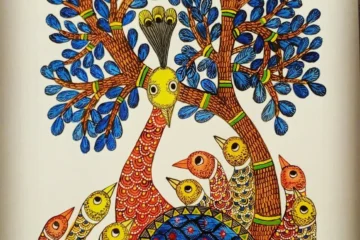
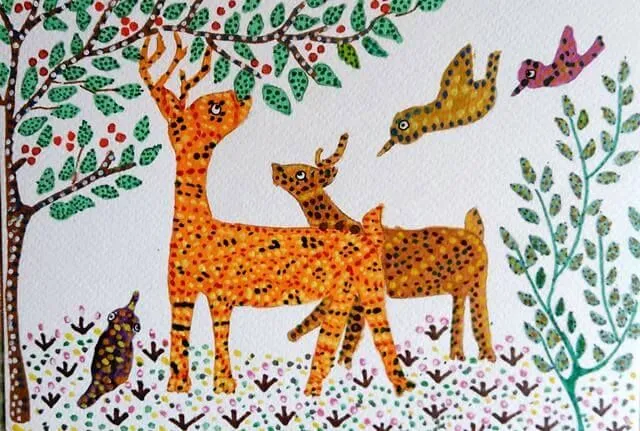
You will quickly start to recognize Bhil paintings anywhere you see the art form after just one look. Large, realistic portraits of commonplace characters are usually displayed in Bhil paintings using earthy yet vibrant colors. These are then covered with an overlay of identical dots in a variety of patterns and colors which clash sharply with the background.
A Bhil painting’s dots are not random. The painters could use these patterns as signs of anything they want, from gods to ancestors. Since the dot patterns are exclusive to the artists that make them, each Bhil artist’s work is distinct, and they can be called the artist’s primary style.
Among the top Bhil artists of the moment is Bhuri Bai of Zher. She started painting at an early age, inspired by the colors of a local festival that portrayed everyday images from the hamlet and joyful gods. She learned from her mother how to build cottages and adorn them with cows, which became a popular design in her artwork. She moved the mud paintings to paper and canvas as an adult, and she still adorns the Museum of Mankind’s walls in Bhopal.
We’re seeing a lot more Bhil art in the media these days. Canvas and acrylic paints with natural dyes have taken the place of clay. These painters, whose paintings sold for hundreds of dollars, are now well-known across the nation and even abroad. Earlier, they would paint on the walls and floors of their village homes. Yet, this kind of art is so deeply rooted that a shift in medium or even fame does not take away from the truthfulness of its portrayals.
Bhuri Bai’s efforts to promote the oral tradition of the Bhil community and her contributions to the art world have been honored with the Padma Shri award. In spite of offering her with much-needed recognition, this prize will serve as encouragement for other artists and indigenous community members to protect and advance their traditional artistic traditions.
Nowadays, a number of Bhil painters use today’s techniques and supplies to produce paintings on paper and canvas. The unique beauty and cultural value of Bhil art, which has gained recognition both inside and outside of India, are valued by many art enthusiasts and collectors.